





Watch video: Does bankruptcy help to eliminate your debts?
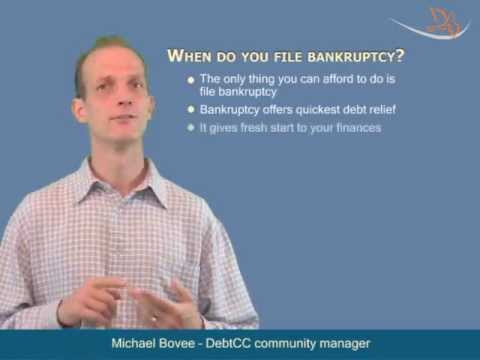
The bankruptcy myths and truths
Reasons to file bankruptcy
- It gives fresh start to your finances
- You can get discharge from your debts quickly
- You've no other option left to wipe out debts
- Only thing you can afford to do is bankruptcy
- You may get debt relief at least cost
Steps to take before filing bankruptcy
- Gather knowledge about bankruptcy rules
- Go through the available resources
- Talk to an experienced bankruptcy attorney
- Fill out the form and submit it
If you have tried almost every option to wipe out your debts but haven't succeeded in your attempts, then you can consider filing bankruptcy. It can be regarded as your last debt relief option to give a fresh start to your financial situation.
Bankruptcy - How it works
By bankruptcy definition, it is a court process that can be initiated either by an individual or a creditor. It works well for most of the individuals since they can discharge debts partially or completely.
Types of bankruptcy
There are 2 types of bankruptcy:
- 1 Chapter 7
- 2 Chapter 13
Other types of bankruptcy are:
- Chapter 9
- Chapter 11
- Chapter 12
- Chapter 15
How much
debt settlement
can save you
How you can decide to declare a bankruptcy
It is true that you should try to avoid bankruptcy. You can try out some other debt relief options beforehand to get rid of your debts. However, you should seek help of court when your debts are completely unmanageable. You can decide to file bankruptcy when:
- You've failed to reach an agreement with creditors
- You couldn't manage finances even after consulting with a credit counselor
- You're facing lawsuits, which you want to stop
- You want to stop annoying collection calls
- Your debt obligations are far more than your assets
- You've received foreclosure notice, and you don't want to lose your home
- Your wage has been garnished, and you want to stop that
- You want to stop the lender to repossess your vehicle
What you should do before filing a Chapter 7 or 13
You can try out these things before you decide to file bankruptcy.
- Analyze your financial situation and plan a suitable budget
- Try out the debt relief programs to get out of debt
- Prioritize your debts and make an alternative payment plan with creditors
- Go for a pre-bankruptcy counseling
- Consult an attorney to get the best bankruptcy advice
Bankruptcy Forums - Valuable source of information
- Click on forums to know about ongoing discussions
- Know about other people considering it
- You can talk to a professional or click the resources tab
Benefits of Bankruptcy
- Bankruptcy helps individuals regain control of their finances and gives them the opportunity to reform and start afresh. With the heavy weight of debt erased, it allows individuals to start working towards their financial and life goals.
- Filing for bankruptcy will finally end the constant calls from creditors and their collection agents demanding money. This can be extremely stressful and once it is gone, it provides great relief to the bankrupt individual. Legal claims and actions by creditors is also rendered null and void.
- Interest charges on credit cards, loans and debts freeze and cease to accumulate once bankruptcy is filed.
- All debt except payments like alimony and child support is eliminated once bankruptcy is declared.
- Employers initially asked to take money out of the individual's salary to pay off creditors will be asked to stop and wages will no longer be garnished.
- Some of an individual's assets will be protected from being seized by creditors and debt collectors.
- Bankruptcy is a cost- efficient solution compared to other debt-solution options like debt consolidation loans or payday loans.
Misconceptions about bankruptcy
Therefore, it is advisable that before filing bankruptcy, consult an attorney for proper bankruptcy information. It also involves a lot of paperwork and legal formalities. So, an experienced lawyer can help you complete the legal process successfully.
Filing Bankruptcy - You can finance a loan after about 12 months of getting discharge of debts
This does not mean you won't have access to credit for the full 10 years!
This is one of the biggest misconceptions out there, and partially what motivated me to write this.
There are many reasons to try to avoid bankruptcy.
Your ability to get credit in the future is one of the flimsiest. Up until the economy started crashing in 2007, consumers who discharged debt in a chapter 7 were finding unsolicited credit offers in their mailbox within 6-12 months of discharge.
The credit offers were generally subprime, so not the best limits and rates, but were offered nonetheless. With the return of risk aversion, and many of the subprime credit card issuers having left the market, I did not see these solicitations for credit just outside of bankruptcy being offered much. Read more...
Having just obtained discharge of unsecured debt, one should not be in a hurry to obtain more, and most certainly not at subprime rates. Current FHA underwriting standards mean you will not qualify for FHA funding after filing bankruptcy for a period of 2 years. It is, therefore, unlikely you will get a loan for a home purchase in this time frame, given the current loan market.
Student loans are generally off the table for a few years, including ones you would apply for in order to assist your child.
You may be able to finance a vehicle purchase after a chapter 7 within 12 months after discharge.
Your credit score is factored on several data points. Roughly a third of it is factored on credit utilization/debt to income (DTI). After discharging debt in a chapter 7, your DTI and utilization should be fabulous.
Now, you wait out some of the 2-3 year timelines lenders and underwriters use as a standard, take a few effective steps to rebuild credit, and this whole 10 year misconception is seen for the baloney it is.
Chapter 13 Bankruptcy is totally different. It's the worst of all options. The court is overseeing a repayment plan of 3 or 5 years. It's on your credit report, you're on a court approved household budget, and if you were to seek a new credit contract of virtually any type, you must first get approval from the court appointed trustee, who has been empowered to tell you ‘NO’. This version of bankruptcy is credit purgatory. It is rigid and inflexible. You will have court protection from creditors, but at the highest cost. It is an option, but should be seen as a last resort if the purpose for filing is strictly based on overwhelming credit card debt.
Industry Expert